Brake noise can change quickly. A light squeal that was easy to ignore last week can turn into a rough grinding sound every time you slow down. Sometimes the noise shows up all at once, even though the brakes seemed completely normal the day before.
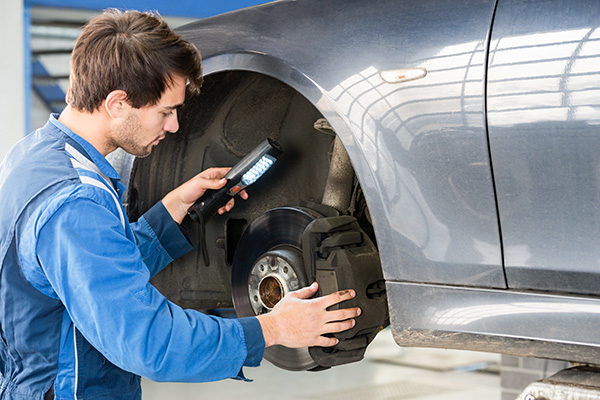
When a vehicle comes into our shop with grinding brakes, we do not assume the pads are worn out and stop there. We pay attention to when the noise happens, which wheel it seems to come from, whether the car pulls, and whether one brake is getting hotter than the others. Once the wheels are off, the wear pattern usually gives us a much clearer direction.
Worn Brake Pads Can Reach the Rotors
One of the most common causes of grinding is a brake pad that has worn through its friction material. Once that material is gone, the metal backing plate starts contacting the rotor.
That metal-on-metal contact makes a harsh grinding sound and can damage the rotor very quickly. Deep grooves form in the braking surface, heat increases, and a repair that could have involved pads alone often becomes a pad-and-rotor job. If the grinding happens every time you press the pedal, we recommend getting the brakes checked rather than continuing to drive until they stop working properly.
A Sticking Caliper Can Wear One Pad Out Early
Sometimes most of the brake pads still have life left, but one pad is already down to metal. That usually tells us something else has been going on.
A sticking caliper piston, seized slide pin, or restricted brake hose can keep one pad against the rotor after you release the pedal. The affected brake stays hot and wears much faster than the others. You might also notice the vehicle pulling, a burning smell, extra brake dust on one wheel, or one wheel being much hotter after a short drive.
During an inspection, we compare the inner and outer pads on both sides of the axle. Replacing the worn pad without correcting the caliper or hardware problem only sets the new parts up to fail again.
Rust Can Make Brakes Sound Rough
Brake rotors are exposed metal, so a light layer of rust can form while the vehicle sits, especially after rain or damp weather. In a wet climate, that can happen overnight.
A little surface rust usually scrapes away after a few normal stops. You may hear a brief scraping sound until the rotor surface cleans up. Heavy rust is different. If the rotor is deeply pitted, heavily scaled, or rusted badly on the inner surface, the noise can continue and braking can feel rough.
We check both sides of the rotor because the back side can be much worse than what you can see through the wheel.
Debris Can Get Caught Near the Rotor
Not every grinding noise means the brake pads are worn out. Small stones, road grit, or debris can get caught between the rotor and backing plate or around the brake assembly.
This kind of noise often starts suddenly. It can happen while driving even when you are not touching the brake pedal, and sometimes the sound changes as you turn.
If the noise appeared right after driving through gravel, construction debris, or rough roads, we keep that possibility in mind. A small stone can make an awful sound without causing a major brake failure, but we still want to remove it before it scores the rotor or damages another part.
Damaged Rotors and Hardware Can Create Grinding Too
A rotor with deep grooves, severe heat spots, cracking, or heavy corrosion can continue making noise even with pads that still have usable material. New pads installed against a badly damaged rotor may also wear unevenly or fail to make full contact.
Brake hardware deserves attention too. Clips, shims, springs, and pad contact points keep everything positioned correctly. If a clip is bent, a pad is binding in the bracket, or a piece of hardware has shifted, metal can contact the rotor or allow the pad to move in a way that creates noise.
At our shop, a complete brake check includes the supporting hardware and caliper movement, not just a quick look at pad thickness.
Grinding After a Brake Job Is Not Something to Ignore
New brakes can make a little noise while the pads and rotors establish an even contact surface. A harsh grinding sound is different.
If grinding starts immediately after brake work, we check pad installation, hardware position, rotor surfaces, dust shields, caliper movement, and anything else close to the rotating parts. We also verify that the pads move freely in their brackets and that the calipers release properly.
Proper bedding helps new pads and rotors work together, but bedding does not fix a part installed incorrectly or a component rubbing where it should not.
Do Not Keep Driving Until the Grinding Gets Worse
Grinding brakes usually become more expensive the longer they are ignored. Worn pads can damage rotors, a dragging caliper can overheat the brake fluid and hardware, and excessive heat can spread damage to nearby components.
Regular maintenance gives us a chance to catch thin pads and uneven wear before metal starts touching metal. Once grinding is already present, the priority is finding the source and seeing how much damage has occurred.
If the grinding comes with weak braking, pulling, a soft pedal, smoke, or a wheel that is extremely hot, stop driving and have the vehicle checked as soon as possible.
Get Brake Grinding Repair In Eugene, OR, With Small World Auto Repair
If your brakes are grinding, scraping, or making a new rough noise during stops, Small World Auto Repair in Eugene, OR, can check the pads, rotors, calipers, hardware, and surrounding brake components to find the actual cause.
Schedule a brake service before a worn or dragging part damages more of the braking system.