Cars make noises. Most of them are harmless, and you learn to tune them out. The tricky part is when a new sound shows up that does not match anything you have heard before. That is the kind of noise that deserves attention, even if the car still drives fine.
Unusual noises are often early warnings. Catch them early, and the repair is usually simpler. Wait too long, and the sound you ignored can turn into a breakdown, a safety issue, or a more expensive fix than it needed to be.
Why New Noises Are One Of The Best Early Warnings
A car is full of moving parts, and most failures start as a small change, not a sudden collapse. A bearing starts to wear. A belt starts to slip. A mount starts to crack. Your ears often catch that change before the dashboard does.
Pay attention to when the noise happens. Is it only on cold starts, only on bumps, only during turns, or only when braking? That timing is one of the fastest ways to narrow the cause and avoid replacing the wrong parts.
1. A Sharp Clicking When Turning At Low Speed
A rhythmic clicking during tight turns is often tied to CV joint wear. Many front-wheel-drive and all-wheel-drive vehicles use CV axles to deliver power while the wheels turn and the suspension moves. When a CV boot tears, grease escapes and dirt gets inside, which speeds up wear.
Drivers usually notice this in parking lots, U-turns, or when backing out of a driveway with the wheel turned. If it gets louder when you add light throttle during a turn, it is worth inspecting sooner rather than later.
2. A Grinding Sound When Braking
Grinding during braking is one of the most urgent noises because it can mean the brake pads are worn down to the metal backing plate. When that happens, the pads cannot protect the rotor, so the rotor gets chewed up quickly.
You might also hear grinding if a caliper is sticking or if a small rock is trapped near the brake shield. Either way, grinding is not a wait-and-see sound. Brakes are a safety system, and a noise here should be checked promptly.
3. A Squeal Under The Hood That Changes With RPM
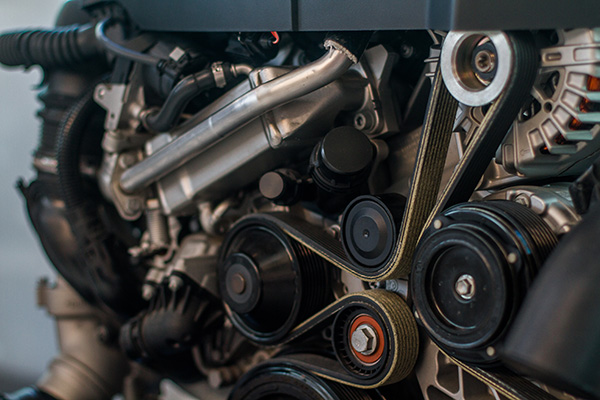
A squealing sound from the engine bay often points to a belt slipping or a pulley that is not spinning freely. This can show up at startup, during acceleration, or when you turn on electrical loads like the AC.
Belts can squeal when they are worn or when the tension is weak. Pulleys and tensioners can also wear, and that can turn a brief squeal into a longer, harsher sound over time. Since belts drive key accessories, a belt problem can leave you stranded if it fails completely.
4. A Low Growl That Rises With Speed
A growling or humming noise that gets louder as you speed up often points toward a wheel bearing or tire wear pattern. Wheel bearing noise can change slightly when you turn and load one side of the vehicle. Tire noise can also rise with speed, especially if the tires have cupping or uneven wear.
A quick clue is whether the sound changes on smooth pavement versus rough pavement. Tire noise often changes with the road surface more than bearing noise does. Either way, it’s worth checking because worn bearings can become a safety issue, and uneven tire wear can point to suspension or alignment problems.
5. A Clunk When You Shift Or Take Off From A Stop
A clunk when shifting from Reverse to Drive, or when taking off, can come from mounts, driveline play, or worn suspension components. Sometimes it is a worn engine or transmission mount, allowing the drivetrain to move too much under load changes.
It can also be a CV joint with too much play, or a loose suspension component that shifts during weight transfer. If the clunk is getting more frequent or louder, it usually means the underlying play is increasing. That is a sign to inspect it before it causes secondary wear.
6. A Whistling Or Hissing That Appears At Speed
A whistle or hiss at highway speed can come from air leaks around seals, but it can also come from mechanical issues. Vacuum leaks under the hood can create hissing. Intake leaks can change how the engine runs. Exhaust leaks can create a sharp hiss that may be more noticeable during acceleration.
If the sound appears only at speed, it could be wind noise. If it appears at speed and the engine behavior changes, such as rough idle or hesitation, it is worth checking for a vacuum or intake issue. If it smells or noiseticks, an exhaust leak is more likely.
At Small World Auto Repair, we’ve seen small noises turn into bigger repairs simply because they were treated as normal for too long. A quick check can save you a lot of frustration later.
Get Noise Diagnostics in Eugene, OR, with Small World Auto Repair
We can track down unusual noises by matching the sound to driving conditions, inspecting the likely components, and confirming the root cause before parts get replaced. We’ll explain what we find in plain language and help you prioritize what needs attention now versus what can be planned.
Call Small World Auto Repair in Eugene, OR, to schedule a noise inspection and get your vehicle back to quiet, predictable driving.